As I stand at the threshold of my home in 2025, I'm reminded that this small space holds immense power—it's the first chapter of my daily story, the transition between the outside world's chaos and my inner sanctuary's peace. Every winter, I've watched my carefully curated entryway descend into what can only be described as organized chaos, but this year feels different. After consulting with organizing visionaries and embracing what I call 'entryway therapy,' I've discovered that creating harmony isn't about perfection—it's about intention.
The Art of Visual Zoning: Where Everything Finds Its Home
Professional organizer Carol Appelbaum taught me that the secret to maintaining order lies in creating what she calls visual zones. "It's like giving every item its own little apartment," she shared with me. This approach transformed how I view my entryway—no longer as a dumping ground, but as my home's personal concierge service.
I now maintain distinct zones for:
-
🧥 Outerwear and accessories (coats, scarves)
-
👢 Shoes and boots
-
🔑 Daily essentials (keys, sunglasses)
-
📬 Mail and deliveries
-
❄️ Quick-grab winter items (gloves, leash, umbrella)
"Containers define drop zones that are easy to identify and maintain," Appelbaum emphasized. I've found that using trays and concealed bins creates clear boundaries that even my most organization-challenged family members can respect. It's about creating a system that works smarter, not harder.
Vertical Thinking: The Unsung Hero of Entryway Design
Interior designer Anita Yokota opened my eyes to the poetry of vertical space. "Everything flows downward," she explained in that zen-like way that makes perfect sense once you experience it. "Upper hooks for coats, mid-level for bags, lower baskets for shoes. This natural gradient mirrors how the brain reads movement and hierarchy."
I've embraced this vertical philosophy wholeheartedly:
| Vertical Level | Purpose | Emotional Impact |
|---|---|---|
| Eye Level | Quick-grab items | Reduces mental clutter |
| Mid Level | Daily essentials | Creates visual rhythm |
| Lower Level | Shoes and storage | Grounds the space |
Yokota's insight about keeping frequently used items at eye or hand level has been a game-changer. "Keeping these visible but orderly gives the brain a sense of control and prevents working-memory overload," she noted—which explains why I no longer experience those 'where did I put my keys?' moments that used to plague my mornings.
The Psychology of Closed Storage
Here's where Appelbaum dropped some truth bombs that changed everything: "Closed storage is the difference between a cluttered space and a curated one." This was my aha moment—the realization that what stays hidden matters as much as what stays visible.
I've learned that closed storage serves multiple purposes:
-
✅ Creates visual calm
-
✅ Contains seasonal items efficiently
-
✅ Maintains the entryway's aesthetic
-
✅ Reduces decision fatigue
Essential Tools for Entryway Harmony
1. The Humble Hook: More Than Just Function
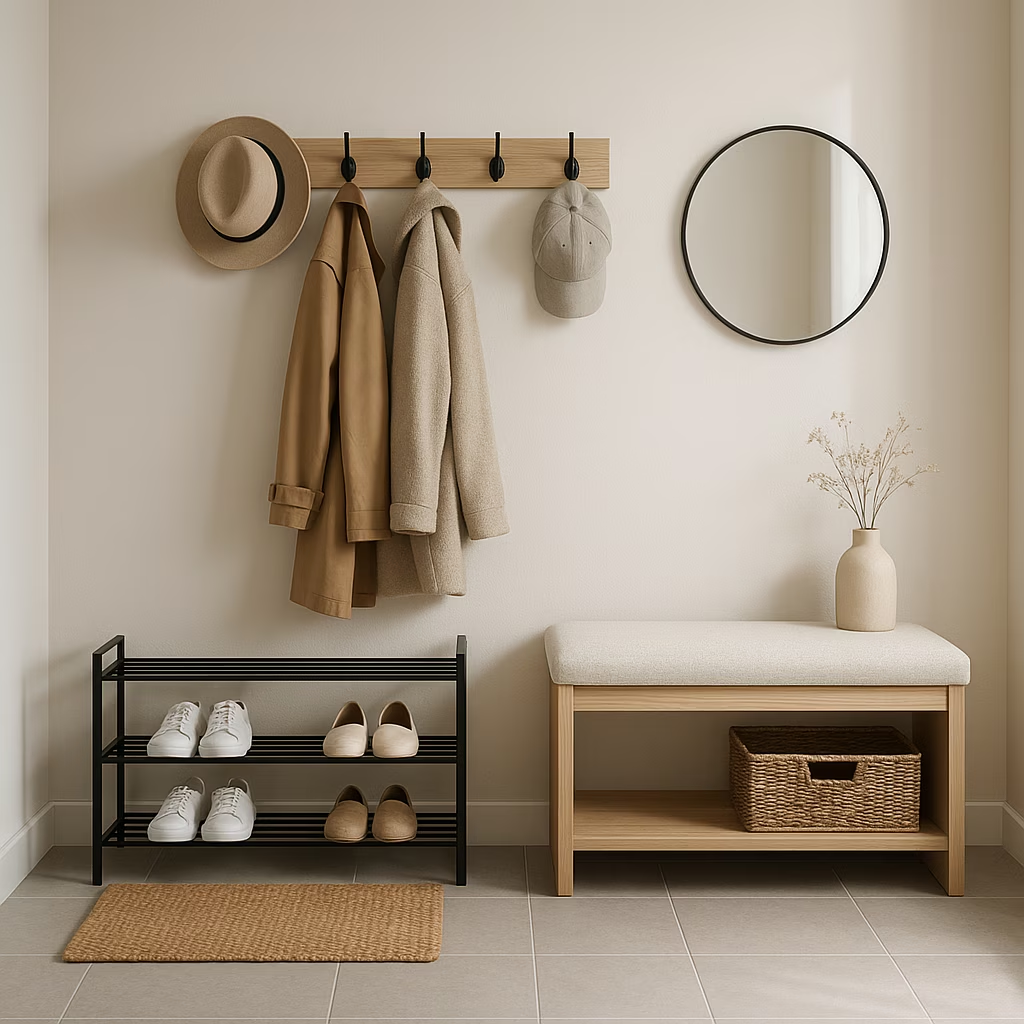
Yokota convinced me that hooks aren't just practical—they're emotional anchors. "Seeing coats, bags, or scarves neatly hung brings visual warmth and texture to the space," she shared. "They become part of the décor, creating rhythm and personality rather than visual clutter." I've since curated a collection of beautiful hooks that actually enhance my entryway's character.
2. The Power of a Pause: Why Benches Matter
If space allows, Yokota insists a bench is non-negotiable. "A bench or seating surface provides a pause point—that physical cue to slow down as you enter or leave home." This has transformed my daily transitions, making them more mindful and intentional.
3. The Catch-All Basket: Your Secret Weapon
Appelbaum's suggestion of a dedicated catch-all basket has been revolutionary. "A single catchall basket keeps the area visually clean while reminding everyone to take items back to their proper place." This simple solution has eliminated the migration of clutter from other rooms that used to plague my entryway.
4. The Console Table: Your Command Center
Yokota calls the console table "the unsung hero of entryway design." "It gives you a landing zone for keys, mail, or a holding box without crowding the entry." I've found that pairing this with some personal touches—a small plant, a meaningful photo—makes the space feel both functional and soulful.
The Emotional Intelligence of an Organized Space
What Yokota calls "emotionally intelligent design" has become my guiding principle. "When function, material, and light work in sync, your space doesn't just look calm, your nervous system feels it." This holistic approach has transformed my entryway from merely organized to truly harmonious.
I've discovered that maintaining this system isn't about rigid rules but about creating something that works for my family's rhythm. As Yokota wisely noted, "Organized spaces feel lighter"—and I can confirm that this lightness extends beyond the physical space into our daily moods and interactions.
The journey to entryway harmony has taught me that organization isn't just about where things go—it's about how a space makes you feel when you cross its threshold. And in 2025, that feeling is one of coming home to yourself, every single day.