Kitchen Design Evolution: The Strategic Retreat of Open Shelving in 2026
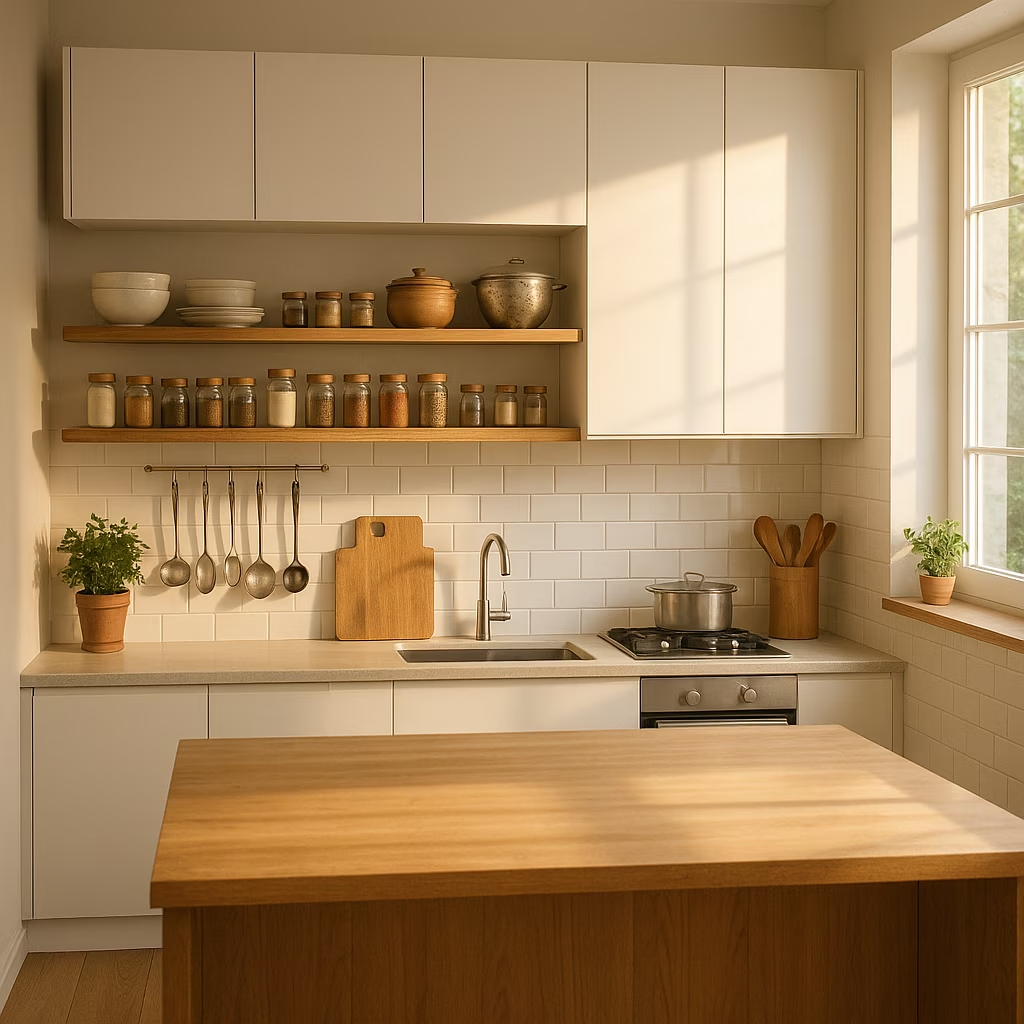
As I look at the evolving landscape of kitchen design in 2026, I'm witnessing a fascinating transformation—the strategic retreat of open shelving from its once-dominant position. What began as a revolutionary movement to create brighter, more spacious kitchens has now matured into a more thoughtful approach that balances aesthetics with everyday functionality. The era of expansive open shelving that dominated kitchen walls like sprawling ivy on a garden wall is gracefully giving way to more intentional design choices that acknowledge the practical realities of kitchen life.
 :max_bytes(150000):strip_icc():format(webp)/best-kitchen-design-trends-4159322-hero-2c5404426e204445b3c182ecfe90ab7b.jpg)
The New Philosophy: Less, But Better
According to leading interior designers, the pendulum is swinging toward what Natalia Lerman, founder of Lerman Designs, describes as "less, but better" open shelving. "Instead of long runs of open shelves that dominate the kitchen, the trend is shifting toward curated, built-in moments that feel architectural and purposeful," Lerman explains. The new approach treats open shelving like carefully placed punctuation in a well-written sentence—each shelf serves a specific purpose rather than overwhelming the entire composition.
Key aspects of this evolved approach include:
-
Strategic placement around windows to maintain brightness
-
Intentional breaks in cabinetry to create visual openness
-
Minimal shelving paired with glass-front cabinets
-
Architectural integration that complements millwork rather than replacing it
:max_bytes(150000):strip_icc():format(webp)/3a-797f8562f84449408d7a094f6b46f96d.jpeg)
Why the Shift? Practicality Over Pure Aesthetics
The romance with open shelving began to fade as homeowners encountered the harsh realities of kitchen maintenance. What seemed like a beautiful display opportunity quickly revealed itself to be a dust magnet and grease collector—like a delicate lace curtain in a windstorm, beautiful in theory but impractical in daily use. The clutter that naturally accumulates in busy kitchens became painfully visible, turning what was meant to be a styling opportunity into a constant cleaning chore.
Taylor Abess of Parlor Interiors notes, "To strike the right balance, especially in a kitchen space where storage is a must, we scale back the amount of open display and introduce layered materials or decorative door fronts for a striking upper cabinetry moment." This approach acknowledges that while we love the airy aesthetic, we also need functional solutions that work with our lifestyles.
The Rising Stars: Alternatives Taking Center Stage
As open shelving steps back, several exciting alternatives are emerging that promise both beauty and functionality:
Glass-Front Cabinets: The Perfect Compromise
Glass-front cabinets have emerged as the darling of 2026 kitchen design, functioning like a museum display case that protects precious contents while still allowing visual access. They offer the light, airy feel of open shelving while providing crucial protection from dust and grease. All the designers I've spoken with agree that glass doors strike the perfect balance between practicality and aesthetic appeal.
Decorative Door Fronts: Hidden Beauty
Designers are embracing decorative cabinet fronts that add personality while keeping clutter concealed. These fronts work like the cover of a beautiful book—hinting at the contents within while maintaining an organized exterior. From textured inserts to mixed materials, these decorative elements create visual interest without the maintenance demands of open shelving.
Freestanding Repurposed Cabinets: Character and Charm
Brittny Button of Button Atelier highlights the growing trend of arched freestanding cabinets that have been repurposed or upcycled. "This leans into the thrifting trend," she notes, "and can be used to display dishes, serveware, and pantry items for a lived-in, cozy, and curated look." These pieces function like individual sculptures in the kitchen, adding character without committing to full-wall open shelving.
:max_bytes(150000):strip_icc():format(webp)/Parlor-Interiors-Miami-Interior-Design-Studio-Wonderland-Kitchen-0096-697b3ce6f34c4c748d38ac8ac6b9fa30.jpeg)
Material Contrast and Texture: The New Frontier
The retreat from open shelving has opened up exciting opportunities for material experimentation. Designers are embracing:
| Trend | Description | Impact |
|---|---|---|
| Material Contrast | Mixing wood and painted finishes | Creates visual depth and interest |
| Textured Inserts | Adding dimension to cabinet doors | Provides tactile experience |
| Mixed Metals | Combining different metal finishes | Adds sophistication and warmth |
According to Abess, "tactile kitchen design will be big in 2026." This approach treats the kitchen not just as a functional space but as a sensory experience, where different materials work together like instruments in an orchestra—each contributing to the overall harmony.
Implementing the New Approach: Practical Tips
For homeowners considering kitchen updates in 2026, here's how to implement this evolved philosophy:
🔹 Start small: Incorporate one or two intentional open shelves rather than entire walls
🔹 Mix and match: Combine glass-front cabinets with solid doors for balance
🔹 Consider function: Place open shelving where it makes practical sense (near cooking stations for frequently used items)
🔹 Embrace texture: Use decorative door fronts to add visual interest without commitment
🔹 Think vertically: Use breaks in cabinetry to create dramatic backsplash moments
:max_bytes(150000):strip_icc():format(webp)/EMR_3728throwa-eddb7bf835d84def9059fc6e6790b900.jpg)
The Future of Kitchen Design: Balanced Elegance
What excites me most about this evolution is that it represents a maturation of kitchen design philosophy. We're moving away from trends that prioritize Instagram-worthiness over daily livability and toward solutions that honor both beauty and function. The kitchen is returning to its roots as the heart of the home—a space that should be both beautiful to look at and comfortable to use every day.
The strategic retreat of open shelving isn't a failure of the trend but rather its natural evolution. Like a skilled gardener who knows when to prune back vigorous growth to encourage healthier development, designers are thoughtfully scaling back open shelving to create more sustainable, beautiful kitchens that will stand the test of time.
As we move through 2026, I'm confident we'll see even more innovative approaches to kitchen storage that continue to balance the desire for open, airy spaces with the practical needs of modern living. The kitchen of the future isn't about choosing between aesthetics and function—it's about finding the perfect harmony between them.